
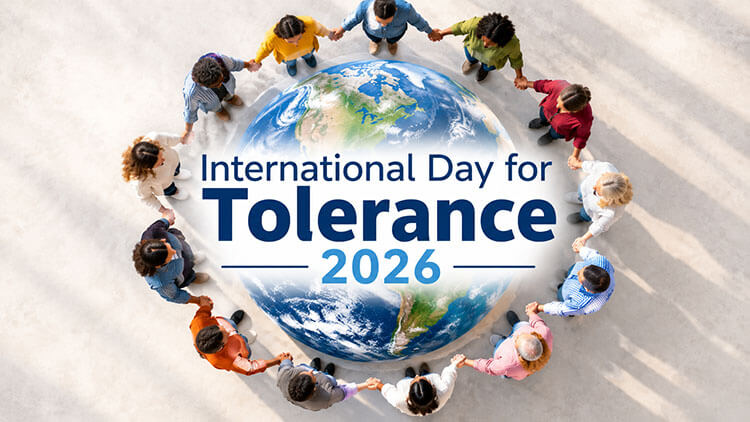
Why Respect for Difference Belongs in Mental Health Research
What is International Day for Tolerance?
International Day for Tolerance is an annual United Nations observance held on November 16. The date marks the day in 1995 when UNESCO’s Member States adopted the Declaration of Principles on Tolerance. A year later, in 1996, the UN General Assembly (resolution 51/95) invited countries to observe the day with activities for schools and the wider public.
The Declaration makes a point that is easy to miss: tolerance is not simply putting up with people who are different from us. It is neither indulgence nor indifference. UNESCO has summed it up as “harmony in difference”: actively respecting the cultures, beliefs, and ways of life that make our communities diverse.
What does tolerance mean in mental health research?
Few areas of health care are shaped by misunderstanding as much as mental health. People living with conditions such as schizophrenia, bipolar disorder, or depression often face stigma in daily life, and that stigma can follow them into the doctor’s office, the workplace, and even the decision to seek care.
For a research organization, tolerance in the UNESCO sense is practical, not abstract. It means:
- Respecting every participant. People who volunteer for a study are partners in research, and they deserve clear information, honest answers, and dignity at every visit.
- Protecting the right to choose. Informed consent exists so that each person can decide, freely and with full information, whether a study is right for them.
- Reaching beyond the usual settings. Treatments are used by people of many backgrounds, in many kinds of communities. Research that only reaches a narrow group can leave important questions unanswered for everyone else.
How does Vanguard Research Group put this into practice?
Vanguard Research Group is an academic research consortium started by Northwell Health in 2014, specializing in behavioral health research. VRG began with one large investigator-initiated trial and a network of 34 mental health clinics. Today that network has grown to more than 150 clinics across the United States, including community mental health and academic sites trained and ready to take part in studies.
Working through community clinics matters. It brings research to the places where people already receive their mental health care, rather than asking them to find their way to a single academic center.
VRG supports government-sponsored and pharmaceutical-sponsored clinical trials across a range of study types, including:
- Studies of new types of therapy or new ways of delivering services
- Studies of new technologies, such as mobile support apps and web-based treatment programs
- Pharmaceutical studies (Phase II–IV) of investigational products or existing medications
- Survey research with specific populations within a clinic
- Combined treatment programs, such as an investigational drug paired with a mobile app
Why does inclusive research matter for everyone?
When research reflects the people who will actually use a treatment, the results are more useful to patients, clinicians, and the health systems that serve them. Including a wide range of communities and clinic settings helps researchers learn how a therapy, app, or medication works in real-world care, not just under ideal conditions.
That is where tolerance and good science meet. Respect for difference is not only the right way to treat people; it is part of how better mental health care gets built.
How can you get involved?
Whether you are a patient, a clinician, or a research sponsor, there is a place for you in mental health research:
- Interested in taking part in a study? Learn what to expect as a participant on our
Potential Participants page. - Running a clinic or practice? See how sites and investigators can join the VRG network on our Sites & Investigators page.
- Planning a behavioral health trial? Explore how VRG supports study sponsors on our Sponsors page.
This International Day for Tolerance, we invite you to take a moment to listen, to learn, and to make room for someone else’s experience. In mental health, that small act of respect can make a real difference.
Frequently asked questions
When is International Day for Tolerance 2026? International Day for Tolerance 2026 is on Monday, November 16, 2026. It is observed on November 16 every year.
Who created International Day for Tolerance? The day follows UNESCO’s Declaration of Principles on Tolerance, adopted by UNESCO Member States on November 16, 1995. In 1996 the UN General Assembly invited Member States to observe the day each year (resolution 51/95).
What is Vanguard Research Group? Vanguard Research Group (VRG) is an academic research consortium started by Northwell Health in 2014 that specializes in behavioral health research. It manages government- and pharmaceutical-sponsored clinical trials through a network of more than 150 mental health clinics across the United States.
What kinds of studies does VRG support? VRG supports studies of new therapies and service delivery models, mobile and web-based treatment programs, Phase II–IV pharmaceutical studies, survey research, and combined treatment programs.
How can I find out about taking part in a mental health study? Visit VRG’s Potential Participants page to learn what participating involves and how to get in touch.